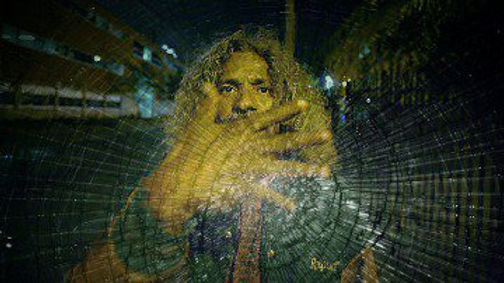
KEN
SKINNER


Kimberly Glasco of the National Ballet of Canada is the featured guest soloist with the jazzmongers!, who, along with Kathleen Rea and Ken Skinner, were able to develop Ken's original dance concepts in a performance for the title track of Skinner's new "Maroon" CD. This, the first piece featuring Kim and Ken's music, was recorded for the BRAVO! network in May of 1996 in their rehearsal space and has had many showings since then. Bravo would later fund the filming of a five minute art video that would also feature Kimberly. The BRAVO! rehearsal space has also seen the likes of Holly Cole, Diana Krall and Densil Pinnock performing jazz there. Kimberly was born in Eugene, Oregon and is a graduate of the National Ballet School. She joined the corps de ballet in 1979 and became a soloist in 1987. Now a principal, she is dancing some of the finest perfomances of her life, right on the heels of Karen Kain's retirement. She's recognized as one of the world's foremost interpreters of Petipa and is the perfect "Swan Queen" or "Sleeping Beauty". Her grace and musical awareness is hallmark to any of her performances. Ken first saw Kimberly in a performance of Adolphe Adam's "Giselle" at the Hummingbird Centre (then the O'Keefe) and was so transfixed by her performance that he was inspired to resurrect his work on a ballet called "Foot Bondage", which is about how Ken saw ballet at the time he was hanging with a ballet student named Annetta and saw bleeding toes for the first time. The main theme from that ballet is called "Annetta's waltz" and is heard in the documentary "jazzmongers" by Ambrose Roche. Ken's fascination with ballet lies in the sense that there didn't seem to be a real classical approach to the jazz vocabulary, so he set out to create one! It would require a dancer to become an active part of the total creative statement. The result is a dance piece whereby the dancer is also creating on the spot variations on a theme. Kimberly and Ken were featured during Ken's reign as "Artist of the week" also on BRAVO! where Kimberly recalled it being a real stretch for her as most of her work has centered itself around already fixed routines or choreography, but Ken was clear enough that through Kathleen Rea this new language could be translated.Ken explained it this way, "Maroon itself is only twelve bars long musically, so we developed my idea of a twelve bar dance theme that itself developed over a set number of cycles of these twelve bars, a concept that could work with live jazz musicians. Although Kimberly has never taken this approach to dance, we structured the performance to be 12 bars times 7 cycles for a total of 84 played bars of music. This way dancer and band can work with each other without sacrificing their artistic integrities." The main point is that the dancer uses her body like an instrument choreographed to the theme as stated by the band and interacts freely with their spontaneous solos as they actually happen. Kimberly Glasco was working with the jazzmongers! again in August 1997 for the filming of "Jombo Memsahb" (from Ken's first Village Jazz CD "Stirling Silver"), funded by the BRAVO! network who obviously became aware of Ken's work. In this case the original 13 minute live recording was digitally edited by Ken to 5 minutes and Kimberly was Choreographed by National Ballet alumni Dominique Dumais which departs from Ken's line of thinking, but this is a video, not a dance or music performance. Ken Skinner: "This (video) gave Chris (Romeike) a chance to make a bit of black and white film, Dominique became a choreographer, Kim danced live in the woods, and I became a digital editor, but artistically? as a video, it is a work of art, because that's where all the parts converge." In the case of the rehearsal space shoot, the integrity of the ideas were preserved, Kimberly followed her chosen writing during the introduction of the musical theme and ventured from it's beginnings during the development or "improv" section, returning to the theme with the musicians. She is dancing sonata format. Kim's solo is extended to overlap musical soloists who take up 4 of the 7 twelve bar cycles. It forces the dancer to reveal themselves as opposed to place technique over accepted "routines". Filming of "Jombo Memsahb" was in the able hands of award winner Chris Romeike who's brilliant camerawork was able to launch the film "Pitch" into the Toronto Film Festival. Ken has two real swingin'compositions (Soulfood and Felonious Punk) arranged by Buddy Aquilina in the film along with "Brother K" contributed by Shawn Nykwist. Buddy's arrangement of "Soulfood" was also filmed in the BRAVO! rehearsal space, all performed by the jazzmongers! and available now on the Village Jazz label. Kimberly Glasco can of course be seen as Prima Ballerina with the National Ballet of Canada, check out her page there. Kimberly was more than game however at trying to adapt to this "new thinking" and put a lot into something that must have seemed very foreign to her. "It was sometimes hard to see what was really going down with the dancing because you can hear without looking but you gotta pay attention to the dancing in order to be relevant" Ken later said. "The video gave us a different form of expression, and I suppose dance needs at least as much stucture as the music does." "Even then it would be preferred if it didn't harken back to Petipa and Balanchine, Nijinsky is my cheoreographic genius, the Buddy Bolden of my Ballet world." Putting the dancer on stage with the musicians and placing the choreography on the whole unit is the true innovation here, offering many "on the spot" opportunities not available in classical dance literature. By virtue of leaving a classical dancer to their own devices makes for singular performances which is in keeping with the traditions of Black Classical Music and puts the name of Kathleen Rea in the annals of history as the woman who interpreted this jazz language and it's real demand on a dancer's listening skills, much like Stravinsky through Nijinsky. This in along with Ken's experiments into other forms of media as well as current sounds like "swing scratchin'" and "jazz rap," which Ken says is truly recycled "jive", makes him a rare multimedia jazz artist if there are any. One of the most entertaining pieces the National Ballet of Canada has is the Ragtime "Elite Syncopations" which uses the music of Scott Joplin, and didn't Dave Brubeck create a piece called "Pointes on Jazz"? Sadly, the National Ballet's creation of "Thriving from a Riff" which uses the music of Charlie Parker, outraged so many patrons of the Ballet that the they stopped performing it. The same thing would later happen to Derosier's "Blue Snake" which is no longer a National Ballet property having been bought instead by the Stuttgart Ballet in Berlin where it is hailed as the work of art it truly is. It is a sad commentary on the kind of support any kind of art receives in North America, but these are some of the factors that made Ken believe a new thinking with a familiar look and sound could work, but it frees the dancer of her ballet imposed "foot bondage". This is an attempt to create a form of jazz-art-dance which can survive in the club scene alongside Jazz music, tables, and customers in places with limited space. In other words, the dance can be "appropriate" in this setting, and is no less a disgrace or disrespectful than putting Black Classical Music in clubs and bars. If you have a chance to see the BRAVO! spotlight, you'll see the results, and we think you'll be asking yourself why there isn't more jazz in "classical" literature. Just needed invention.
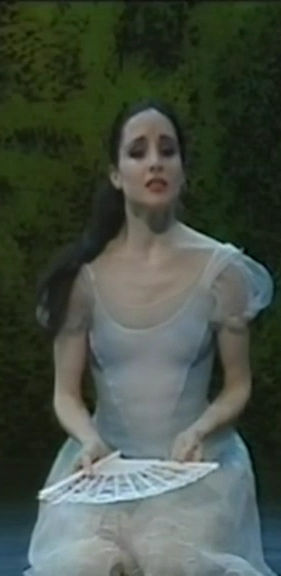
Kimberly later became a news item for taking the ballet to court and suing them for over a million and a half dollars and won. It was at the same time my troubles began with a diagnosis of Kasandra and a famous sick kids hospital. Kim and I were both talking to Dr Nancy Olivieri who was going through her own trials with said hospital as well. In the hospital they happened to have the BRAVO! channel on and Kimberly came on dancing in Chris' video. Just then they called my daughter's name and I hoped it was a good sign. What it was instead was the last time I ever saw that video anywhere after that, my daughter was ill and that's all that mattered after that. It was a tough way to have a conversation with Kim in those days and now that she's married and a mom I think I'll save my next on-a-whim phone call to Kimberly Glasco for some kind of really good news like I've finally finished the next album but I'm just too old to try and create a circus around it. I'll always remember my time of creativity with miss Kimberly Glasco.
Kimberly Glasco
By the time I was with Judy my fascination with ballet must have seen past strange and when I did make any money I was usually selling tickets for the National Ballet of Canada. I had won a poster at the ballet signed by Kim. It was in the second bedroom where the piano and all my records and books were. Along with a couple of Kate Bush posters, Chaplin, Jane Bunnett and one more I'm forgetting.
For some unknown reason other than a strange compulsion, I picked up the phone and called the ballet and asked if I could leave a voice message for Kimberly Glasco as I'd like to film her in a video of jazz music. Even I had no idea what I was talking about yet. The lady very kindly told me that I couldn't reach her there any time soon. I thought I'd hit the wall when she explained that Kimberly was in Montreal and could give me her hotel, room and phone number. Well it was 1992 at the time and I guess stalkers just never go after ballerinas. Needless to say, I got in touch with her, told her of my plot and she seemed very interested in contributing. That was great. Now all I had to do was find somebody who might be interested in getting the grants to film it.
Once Stirling Silver was released it was far easier to get people's attention on every level and being able to put something in a person's hands made you real to them as well. I was at the very warehouse I once lived in and now I worked in when a good portion of it fell to Stevie Cogdell and his Lionheart studios. Norman still had my former loft. Filmographer and photographer Chris Romeike came by Lionheart studios and somehow I managed to have a CD with me I could give him. I was just starting to sell them to clubs, bars and restaurants. It took Chris three years to get BRAVOfact money to produce a video for "Jombo Memsahb" from Stirling Silver. By this time "Maroon" had come out and Jorge Manzano and Gerry Mendoza got their money to make "Maroon" in less than a year. Maybe having two companies interested in using my music helped them decide on both, I don't know but it opened some new possibilities.
Kimberly danced in the official video for "Jombo Memsahb" and was choreographed by the great Dominique Dumais. I thought some of the shots were especially good, the opening shots in particular. While this was in motion I managed to become "Artist Of The Week" on BRAVO! and was fortunate enough to have Kimberly agree to dance against a variation of "Maroon" The idea being that the twelve bar phrase is played to a total of 84 bars. So she had a tape to rehearse with and of course I knew the cats wouldn't blow the same smoke twice so I just explained to Kim that what she dances will still make sense because the guys would respond to her moves as well and it would all be very beautiful. We appeared together in a short interview before we performed at the rehearsal space. The manic high was paying off and it makes it easier to deal with personal inertia when there is so much already in motion. It was my personal 1996 - 1997 ballet season with the most photogenic dancer I ever saw and I met many dancers later when I returned to work at the Walter Carsen Centre. I felt a bit akin to Hector Berlioz seeking out his Harriet and creating works of art for her to amuse the world with. It was beautiful.

